Brickface vs. Stucco: Which Is Right for Your NJ Home?
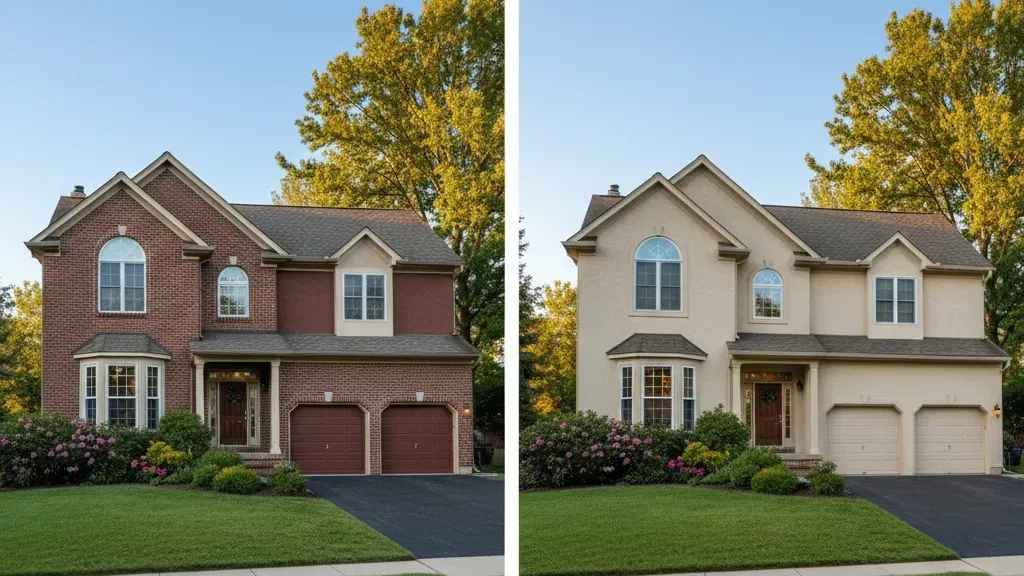
Choosing an exterior finish for your New Jersey home comes down to a handful of practical questions: How will it look? How long will it last? What does it cost? And will it hold up to Garden State weather? Two of the most popular options in this region are brickface and traditional stucco. They share a common material base but produce very different results.
This guide breaks down the real differences between brickface and stucco so you can make a confident decision for your home.
What Is the Difference Between Brickface and Stucco?
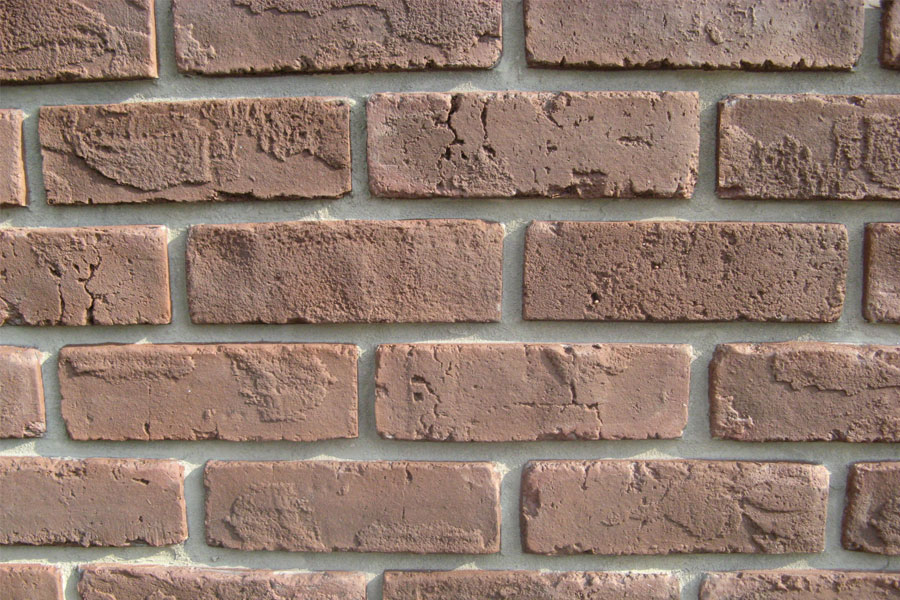
Brickface and stucco both use a Portland cement mixture applied to exterior walls. The difference is in the finish. Traditional stucco creates a smooth or textured surface with a uniform appearance. Brickface is a stucco application where the wet cement is hand-scored to create realistic mortar joints and a brick-like pattern.
Think of it this way: stucco is the material, and brickface is a specific technique for finishing that material. A skilled contractor takes the same cement base and shapes it to look like individual bricks separated by mortar lines. The result closely resembles traditional brick masonry but at a lower cost and lighter weight.
Garden State Brickface and Siding pioneered this technique in 1953 and has been perfecting its proprietary cement formula for over 70 years. The company applies both traditional stucco and brickface finishes, so the recommendation always comes down to what works best for the homeowner’s goals.
Appearance: How Do They Look?
Stucco
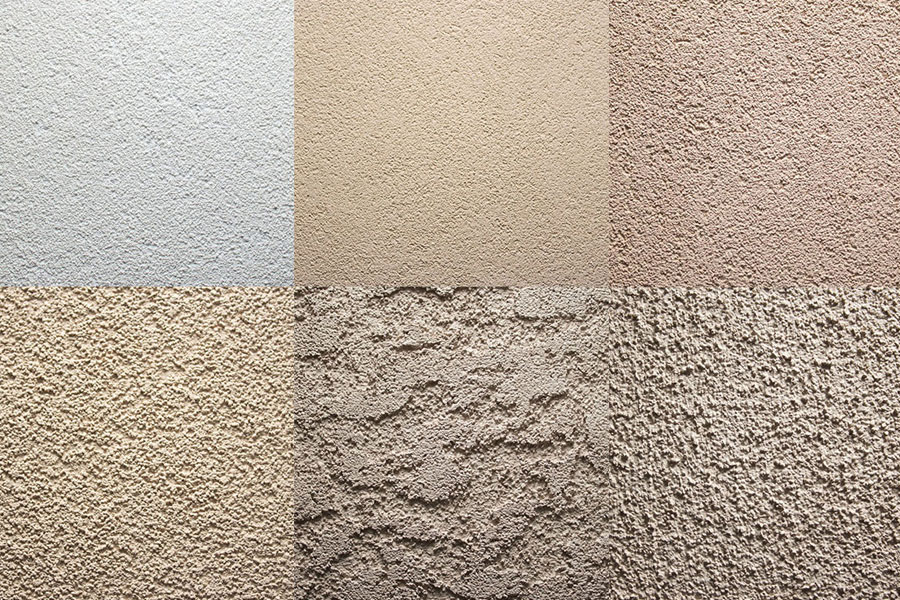
Traditional stucco offers a clean, uniform look. The finish can be smooth, sand-textured, or rough depending on the application technique. Stucco works well on Mediterranean, Spanish, Southwest, and modern architectural styles. The surface can be pigmented in nearly any color during application or painted after curing.
Stucco gives a home a sleek, monolithic appearance. There are no visible seams, joints, or individual elements. The entire wall surface reads as one continuous plane.
Brickface
Brickface delivers the classic look of brick masonry. The hand-scored joints create depth and shadow that you can actually see from the street. Colors range from traditional red and brown tones to lighter tans and grays. Because each installation is done by hand, no two brickface homes look exactly the same.
Brickface suits colonial, Tudor, craftsman, and traditional architectural styles. It adds a sense of permanence and established character that smooth stucco does not.
Bottom line on appearance: If you want a smooth, modern look, go with stucco. If you want the classic warmth and texture of brick, brickface is the better choice.
Durability and Weather Resistance in NJ
New Jersey’s climate puts every exterior finish to the test. Summers bring humidity and temperatures above 90 degrees. Winters drop below freezing with ice, snow, and nor’easters. Spring and fall swing between warm and cold, creating constant freeze-thaw cycles. Here is how each finish handles it:
| Weather Factor | Stucco | Brickface |
|---|---|---|
| Freeze-thaw resistance | Good when sealed properly | Good when sealed properly |
| Wind resistance | Excellent (continuous surface) | Excellent (continuous surface) |
| Moisture protection | Good (requires breathable sealer) | Good (requires breathable sealer) |
| Impact resistance | Moderate | Moderate to high (textured surface distributes force) |
| UV resistance | High (cement does not fade like vinyl) | High (pigmented cement resists fading) |
| Typical lifespan | 50 to 80 years | 50 to 80 years |
Both finishes perform well in NJ weather because they share the same material foundation. The cement mixture is naturally fire-resistant, pest-proof, and does not warp or rot. According to the National Association of Home Builders (NAHB), cement-based stucco finishes are among the longest-lasting exterior claddings available, with properly maintained installations lasting 50 years or more.
The critical factor for either finish is the quality of the installation. A three-coat system (scratch coat, brown coat, finish coat) applied over properly installed lath with a weather-resistant barrier gives the best long-term results. Cutting corners on any layer shortens the lifespan significantly.
Cost Comparison: Brickface vs. Stucco
Cost is often the deciding factor for NJ homeowners. Here is a general comparison:
- Traditional stucco typically costs between $6 and $10 per square foot for materials and labor. The smooth or textured finish requires fewer steps than brickface because there is no scoring or joint work.
- Brickface typically costs between $8 and $14 per square foot. The additional hand-scoring work adds labor time. More complex brick patterns and multi-color blending increase the price further.
For a 2,000-square-foot home exterior, the difference between stucco and brickface might be $4,000 to $8,000 depending on the design. Both options cost significantly less than real brick veneer, which runs $15 to $30 per square foot.
These are general ranges. Actual costs depend on your home’s size, the condition of the existing exterior, design complexity, and the contractor’s experience. The only way to get an accurate number is through an on-site consultation.
Maintenance: Which Is Easier to Care For?
Both brickface and stucco require minimal maintenance compared to wood siding, vinyl, or painted surfaces. That said, there are small differences worth knowing.
Stucco maintenance
- Inspect annually for cracks, especially around windows and doors
- Clean with a garden hose and soft brush (avoid high-pressure washing)
- Apply a breathable masonry sealer every 5 to 7 years
- Repair hairline cracks with elastomeric caulk
- Smooth stucco surfaces show dirt and staining more easily than textured finishes
Brickface maintenance
- Same annual inspection and cleaning routine as stucco
- The textured, scored surface hides minor dirt and imperfections better than smooth stucco
- Mortar-line crevices may collect debris over time; a garden hose rinse usually handles it
- Same 5 to 7-year sealing schedule applies
- The three-dimensional surface distributes stress differently, which can make hairline cracks less visible
In practice, the maintenance routines are nearly identical. Brickface has a slight edge for homeowners who prefer a low-effort exterior because the textured surface is more forgiving of minor dirt and wear.
Which Architectural Styles Work Best?
The right choice often depends on what style your home already has or what look you are going for:
| Home Style | Best Fit | Why |
|---|---|---|
| Colonial / Traditional | Brickface | Matches the historic brick aesthetic these homes are known for |
| Tudor | Brickface + stucco combination | Classic Tudor homes use both stucco panels and brick accents |
| Mediterranean / Spanish | Stucco | Smooth stucco is the defining exterior for these styles |
| Modern / Contemporary | Stucco | Clean lines and smooth surfaces suit minimalist design |
| Craftsman | Brickface (lower level) + siding (upper) | Brick-look foundations paired with other materials are common |
| Cape Cod | Either | Both finishes complement this versatile style |
| Ranch | Either | Depends on whether you want a classic or modern look |
Many NJ homeowners use both finishes on the same home. A common approach is brickface on the front facade for curb appeal and traditional stucco on the sides and back to manage costs. Garden State Brickface regularly handles these combination projects.
How Does Each Finish Affect Home Value?
Both stucco and brickface are premium exterior finishes that outperform vinyl and aluminum siding in terms of perceived quality. According to Remodeling Magazine’s Cost vs. Value Report, exterior siding projects typically recoup 60% to 80% of the investment at resale.
Brickface has a specific advantage for resale value in regions where brick homes carry a premium. In New Jersey, buyers associate brick exteriors with durability and quality. Brickface delivers that same visual impression at a lower cost than real brick.
Stucco also adds value, especially on homes where it matches the architectural style. A well-done stucco finish on a Mediterranean or modern home signals quality craftsmanship to buyers.
The bottom line: either finish improves your home’s value over vinyl or wood siding. The better choice is whichever one matches your home’s architecture and your neighborhood’s aesthetic.
Can You Switch from Stucco to Brickface (or Vice Versa)?
Yes, in most cases. If your home already has a stucco-based exterior, a contractor can apply a new brickface finish over the existing surface after proper preparation. This process is called resurfacing, and it is one of the most popular services Garden State Brickface offers.
The reverse is also possible. A brickface exterior can be resurfaced with a smooth stucco finish if the homeowner wants a different look. The existing surface needs to be evaluated for adhesion, moisture issues, and structural integrity before new material goes on.
Switching between finishes is generally less expensive than a full tear-off and replacement because the underlying substrate stays in place. The contractor applies new material on top of the prepared surface.
Why Contractor Experience Matters for Both Finishes
Both stucco and brickface are hand-applied trades that require skill and experience. The difference between a mediocre installation and a great one is the contractor, not the material.
Here is what to look for when choosing a stucco or brickface contractor in New Jersey:
- Decades of experience: Cement-based finishes behave differently in NJ’s humid summers and cold winters. Contractors who have been working in this climate for years know how to adjust mix ratios, application thickness, and curing schedules for the season.
- In-house crews: Companies that use their own trained workers (not subcontractors) deliver more consistent results. Garden State Brickface employs in-house crews who specialize in both finishes.
- Verified reviews: Look for contractors with 100+ reviews on Google. Garden State Brickface has over 200 five-star reviews from NJ homeowners.
- Both services offered: A contractor who does both stucco and brickface can give you an honest recommendation based on your home’s architecture and your budget, rather than pushing the only option they offer.
Frequently Asked Questions
Is brickface just a type of stucco?
Yes. Brickface uses the same cement-based stucco material as traditional stucco. The difference is the finish technique. Brickface stucco is scored to look like individual bricks, while traditional stucco has a smooth or textured uniform surface.
Which lasts longer, brickface or stucco?
Both last 50 to 80 years when properly installed and maintained. The lifespan depends more on installation quality and maintenance than the finish style itself.
Can I use brickface on just part of my home?
Absolutely. Many NJ homeowners use brickface on the front of the home and traditional stucco on the sides and back. This combination approach gives you the curb appeal of brick at a lower total cost.
Does brickface cost more than stucco?
Brickface generally costs 20% to 40% more than traditional stucco because of the additional hand-scoring labor. Both options cost significantly less than real brick veneer.
Which is better for a home near the NJ shore?
Both perform well in coastal conditions. The key for shore properties is proper sealing against salt air and moisture. Either finish, when sealed with a breathable masonry sealer, handles the coastal environment effectively. A siding specialist can recommend the best option for your specific location.
Making Your Decision
Choosing between brickface and stucco comes down to three factors: the look you want, your budget, and your home’s architecture. Here is a quick decision guide:
- Choose brickface if you want the classic look of brick masonry, your home has a traditional or colonial style, and you are willing to invest a bit more for the hand-scored finish.
- Choose stucco if you prefer a smooth, modern appearance, your home has Mediterranean or contemporary architecture, and you want a slightly lower price point.
- Choose both if you want maximum curb appeal on the front with cost savings on the less visible sides of your home.
Either way, the most important decision is who installs it. Garden State Brickface and Siding has been applying both finishes across New Jersey since 1953. With over 200 five-star Google reviews, a proprietary cement formula, and in-house crews, the company delivers exterior finishes that last for generations.