Vinyl Siding vs. Fiber Cement: Which Is Better for Your NJ Home?
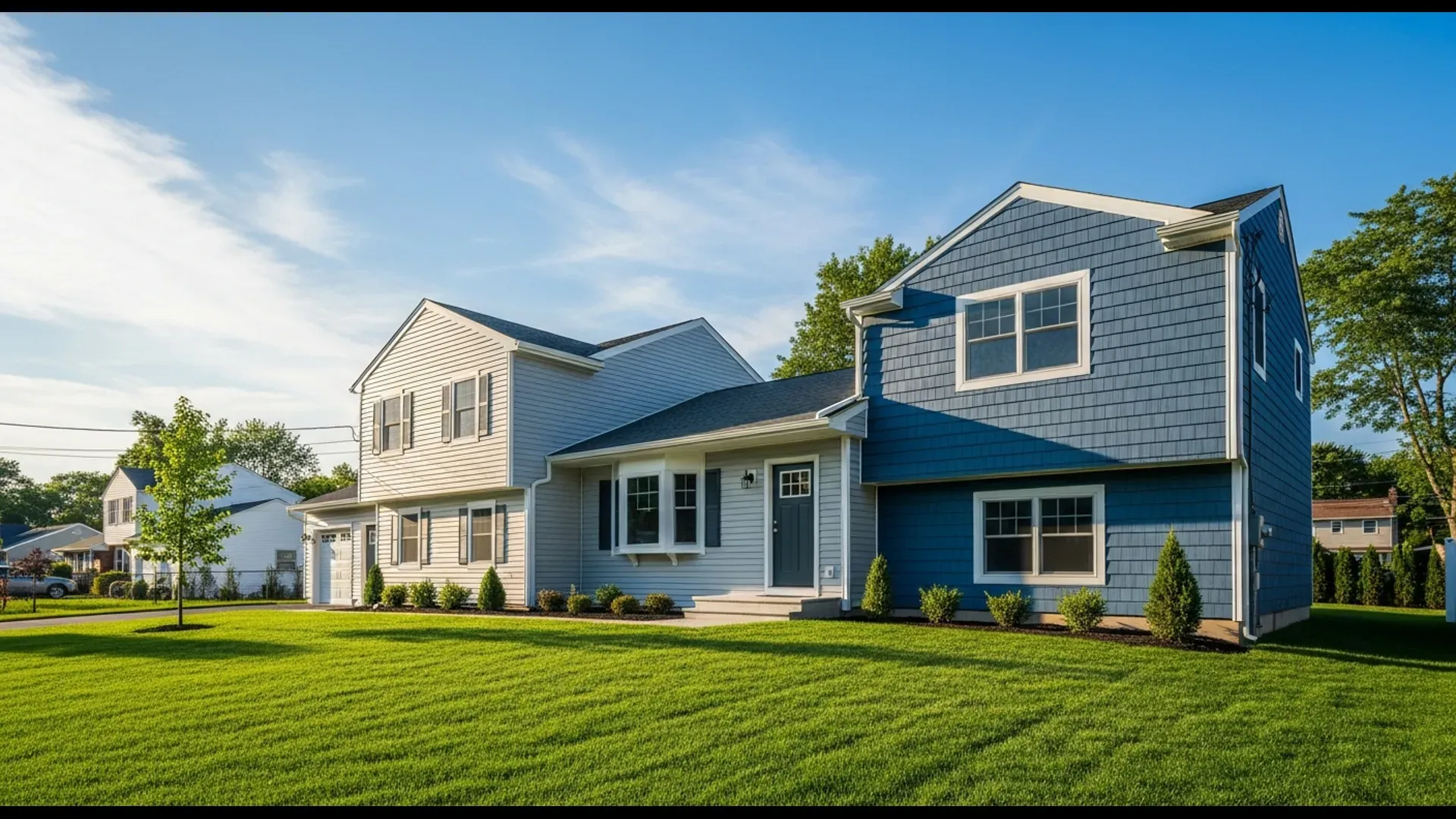
Choosing between vinyl siding and fiber cement siding is one of the biggest decisions NJ homeowners face during an exterior renovation. Both materials protect your home from harsh winters, humid summers, and coastal storms, but they differ in cost, lifespan, maintenance, and appearance. This guide breaks down the real differences so you can make the right call for your property and budget.
Get a free siding estimate from Garden State Brickface and Siding or call us at 908-241-5900 to discuss your project.
Vinyl Siding vs. Fiber Cement: A Quick Comparison
| Feature | Vinyl Siding | Fiber Cement Siding |
|---|---|---|
| Material | PVC (polyvinyl chloride) resin | Portland cement, sand, cellulose fibers |
| Installed Cost (per sq ft) | $3 to $8 | $6 to $13 |
| Lifespan | 20 to 40 years | 30 to 50+ years |
| Maintenance | Low (occasional washing) | Moderate (repainting every 10 to 15 years) |
| Fire Resistance | Melts, does not ignite easily | Non-combustible (Class A fire rating) |
| Insect Resistance | High (not a food source) | High (cement-based, no organic material) |
| Wind Resistance | Up to 110 mph (standard); 160+ mph (premium) | Up to 130 mph or higher |
| Color Retention | Good (color molded through) | Excellent (factory-primed, paintable) |
| Weight | Lightweight (easy install) | Heavy (requires skilled crew) |
| Appearance | Smooth or textured plastic look | Mimics wood grain, stucco, or stone |
| Best For | Budget-friendly curb appeal | Premium look with long-term value |
Bottom line: Vinyl siding costs less upfront and requires minimal maintenance. Fiber cement costs more but lasts longer, resists fire, and offers a higher-end appearance. Your choice depends on your budget, timeline, and how long you plan to stay in the home.
What Is Fiber Cement Siding?
Fiber cement siding is a composite material made from Portland cement, silica sand, and cellulose fibers. The most recognized brand is James Hardie (HardiePlank), which controls roughly 90% of the North American fiber cement market. Builders and contractors sometimes call it “Hardie board” regardless of the actual manufacturer.
The manufacturing process creates planks, shingles, or panels that can replicate the look of natural wood, cedar shakes, or smooth stucco. Fiber cement comes factory-primed and accepts any exterior paint color, so homeowners have full control over their home’s appearance.
Because of its cement composition, this material resists rot, warping, and termite damage. It also carries a Class A fire rating, making it one of the most fire-resistant siding options available. These properties make fiber cement especially practical for New Jersey, where humidity, freeze-thaw cycles, and occasional nor’easters test exterior materials year-round.
What Is Vinyl Siding?
Vinyl siding is made from PVC resin, a durable plastic that has been a staple in American residential construction since the 1960s. According to the U.S. Census Bureau’s Survey of Construction, vinyl accounts for roughly 27% of new home siding installations nationwide, making it the single most common exterior cladding material in the country.
Modern vinyl siding comes in hundreds of colors and profiles, including Dutch lap, board and batten, scallop, and shake styles. The color is molded throughout the material rather than applied as a coating, so scratches and minor damage are less noticeable. Insulated vinyl siding adds a foam backing layer that improves R-value and reduces noise transmission.
Vinyl’s biggest advantage is its price-to-performance ratio. It installs faster than fiber cement, requires no painting, and resists moisture without special sealants. For NJ homeowners working within a set budget, vinyl often delivers the best return on investment per dollar spent.
How Much Does Each Material Cost in New Jersey?
Cost is the most common deciding factor for NJ homeowners, and the gap between these two materials is significant.
Vinyl Siding Cost Breakdown
- Materials only: $1.50 to $4.00 per square foot
- Installed: $3.00 to $8.00 per square foot
- Average NJ home (1,500 sq ft of siding): $4,500 to $12,000 total
- Insulated vinyl: Add $1.00 to $2.50 per square foot
For a more detailed pricing breakdown, read our guide on how much it costs to install vinyl siding.
Fiber Cement Siding Cost Breakdown
- Materials only: $2.50 to $7.00 per square foot
- Installed: $6.00 to $13.00 per square foot
- Average NJ home (1,500 sq ft of siding): $9,000 to $19,500 total
- Premium profiles (shingles, panels): Add $2.00 to $5.00 per square foot
Fiber cement’s higher cost comes partly from heavier labor. Each plank weighs 2 to 3 times more than vinyl, requires special cutting tools (to manage silica dust safely), and takes more time to install. In New Jersey, where labor rates already run higher than the national average, this can push fiber cement projects 40% to 60% above comparable vinyl jobs.
Which Material Handles New Jersey Weather Better?
New Jersey’s climate is tough on exterior materials. Summers bring heat and humidity that can warp lesser products. Winters deliver freezing rain, snow, and temperature swings from the teens to the 50s in a single week. Coastal areas add salt spray to the mix. Here is how each material performs under these conditions.
Freeze-Thaw Performance
Fiber cement is denser than vinyl and handles freeze-thaw cycles well, provided it was properly installed with adequate caulking and flashing. If moisture gets behind fiber cement panels through poor installation, water can freeze inside the material and cause cracking. With vinyl, the interlocking panel design allows water to drain freely, reducing the risk of trapped moisture.
Hurricane and Storm Resistance
Standard vinyl siding is rated for winds up to 110 mph. Premium insulated vinyl can withstand 160 mph or more. Fiber cement panels, because of their weight and rigid mounting, typically resist winds up to 130 mph. Both materials perform well during typical NJ nor’easters (sustained winds of 40 to 60 mph), but vinyl’s flexibility gives it a slight edge during extreme gusts because it can flex rather than crack.
Moisture and Humidity
Both materials resist moisture, but they handle it differently. Vinyl is inherently waterproof since plastic does not absorb water. Fiber cement must be sealed and painted to prevent moisture absorption. In NJ’s humid summers, any exposed or chipped fiber cement surfaces can absorb water and eventually deteriorate. This is why repainting fiber cement every 10 to 15 years is not optional; it is protective maintenance.
Ready to discuss which siding material fits your home? Schedule a free consultation with our siding specialists, or call 908-241-5900.
Durability and Lifespan: Long-Term Value
Fiber cement wins on raw lifespan. Most manufacturers warrant their fiber cement products for 30 to 50 years, and James Hardie offers a 30-year non-prorated limited warranty. Vinyl siding warranties typically cover 20 to 40 years, though many top-tier vinyl products now include lifetime limited warranties.
In practice, the real lifespan depends on installation quality and maintenance:
- Fiber cement with regular repainting: 40 to 50+ years is realistic
- Fiber cement without repainting: Moisture damage can start within 15 to 20 years
- Vinyl with occasional washing: 25 to 35 years before fading or brittleness
- Insulated vinyl: The foam backing extends functional life and reduces expansion/contraction stress
For NJ homeowners planning to stay in their home for 20+ years, fiber cement often delivers better long-term value despite the higher upfront cost. If you are planning to sell within 5 to 10 years, vinyl’s lower investment and solid curb appeal may make more financial sense.
Maintenance: What Each Material Actually Requires
One of the biggest misconceptions about siding is that “low maintenance” means “no maintenance.” Both vinyl and fiber cement require some care to perform well in New Jersey’s climate.
Vinyl Siding Maintenance
- Wash with a garden hose or pressure washer once a year to remove mildew and dirt
- Inspect for cracks or loose panels after major storms
- Replace individual damaged panels as needed (easy and inexpensive)
- No painting required, ever
Fiber Cement Siding Maintenance
- Repaint every 10 to 15 years (budget $3,000 to $7,000 per repaint for a typical NJ home)
- Inspect and re-caulk joints and trim every 3 to 5 years
- Wash annually to prevent algae and mildew buildup
- Repair or replace any chipped or cracked boards promptly to prevent moisture intrusion
The repainting cost is the hidden expense that many homeowners overlook when choosing fiber cement. Over a 30-year span, you may repaint 2 to 3 times, adding $6,000 to $21,000 to the total cost of ownership. Factor this into your budget when comparing the two options.
How Does Each Material Affect Home Value?
According to the Remodeling 2024 Cost vs. Value Report, fiber cement siding replacement recoups approximately 86% to 88% of its cost at resale in the Mid-Atlantic region. Vinyl siding replacement recoups roughly 68% to 72%. Fiber cement’s higher ROI reflects buyer perception: homes with fiber cement are often viewed as higher quality, and appraisers treat it as a premium material.
That said, most NJ buyers care more about overall curb appeal and condition than the specific siding material. A well-maintained vinyl-sided home with fresh landscaping can appraise just as well as a neglected fiber cement property. The material matters, but upkeep matters more.
Are There Better Options Than Both?
Vinyl and fiber cement are not the only choices. Depending on your home’s architecture, budget, and aesthetic goals, other materials may be worth considering:
- Brickface stucco: Garden State Brickface and Siding pioneered a proprietary brickface stucco technique in 1953. This cement-based application creates the look of real brick at a fraction of the weight and cost. It is fire-resistant, durable, and ideal for NJ homeowners who want a timeless masonry appearance without a full brick rebuild.
- EIFS (synthetic stucco): Exterior Insulation and Finish System wraps your home in insulation before applying a textured finish. It offers superior energy efficiency and a smooth, modern look. Read our comparison of EIFS vs. traditional stucco for more details.
- Stone veneer: Lightweight manufactured stone creates a natural stone appearance over existing substrates. It pairs well with other siding types as an accent material on foundations, columns, or entryways.
- Engineered wood: Brands like LP SmartSide use treated wood strands bonded with resin. This material offers real wood texture at a lower price than natural wood, though it requires periodic painting like fiber cement.
Many NJ homeowners combine two or more materials to create visual interest. For example, fiber cement on the main body with brickface stucco accents on the foundation and chimney, or vinyl siding with stone veneer on the front elevation.
How to Choose the Right Siding for Your NJ Home
There is no single “best” siding material. The right choice depends on your specific situation. Use these guidelines:
Choose vinyl siding if:
- Your budget is under $12,000 for a full re-side
- You want minimal ongoing maintenance costs
- You plan to sell within 5 to 10 years
- Your home’s style works with a clean, uniform look
Choose fiber cement siding if:
- You want a premium appearance that mimics natural wood
- Fire resistance is a priority (near wooded areas or in denser neighborhoods)
- You plan to stay in your home for 15+ years and want maximum longevity
- You are willing to budget for periodic repainting
Consider brickface stucco or other alternatives if:
- You want a masonry or textured look without the cost of full brick or stone
- Your home has existing stucco or masonry that needs replacement or resurfacing
- You want the best possible fire and weather resistance in a cement-based product
Regardless of the material you choose, installation quality determines 80% of your siding’s performance. Poorly installed fiber cement can fail faster than well-installed vinyl. That is why working with an experienced, local contractor matters more than the material itself.
Request a free siding estimate from Garden State Brickface and Siding. With 70+ years of experience and 200+ five-star reviews, we help NJ homeowners pick and install the right siding for their home. Call 908-241-5900 today.
Frequently Asked Questions
Is fiber cement siding worth the extra cost over vinyl?
For homeowners who plan to stay in their home for 15+ years, fiber cement often provides better long-term value thanks to its 40 to 50 year lifespan and higher resale return (86% to 88% cost recovery vs. 68% to 72% for vinyl). If you are selling within 5 to 10 years, vinyl’s lower upfront cost may be the smarter financial move.
Can you install fiber cement siding over existing vinyl?
Technically, yes, but it is not recommended. Fiber cement is much heavier than vinyl, and installing it over old siding adds weight to the wall framing without allowing proper inspection of the sheathing and weather barrier underneath. Most contractors, including our team, recommend removing old siding before installing fiber cement.
Which siding is better for New Jersey’s humidity?
Vinyl is inherently waterproof since PVC does not absorb moisture. Fiber cement must be properly painted and sealed to resist moisture absorption. In NJ’s humid summers, vinyl has a slight edge for moisture performance, but well-maintained fiber cement performs well too.
How long does vinyl siding last in NJ?
Quality vinyl siding lasts 25 to 35 years in New Jersey with minimal maintenance. Premium insulated vinyl may last longer due to reduced thermal stress. Annual washing and prompt repair of any storm damage extend the lifespan further. See our types of vinyl siding page for details on different grades and profiles.
Does fiber cement siding increase home value more than vinyl?
Yes. The 2024 Cost vs. Value Report shows fiber cement recouping 86% to 88% of its cost at resale in the Mid-Atlantic region, compared to 68% to 72% for vinyl. Buyers and appraisers view fiber cement as a premium material, which typically translates to higher appraised value.