Traditional Stucco vs EIFS: Which Performs Better for NJ Homes?
New Jersey homeowners weighing exterior cladding options face a nuanced decision between traditional Portland cement stucco and Exterior Insulation and Finish Systems (EIFS). Both deliver proven performance across the state’s humid summers and punishing freeze-thaw winters, but they achieve that performance through fundamentally different construction methods, thermal properties, and moisture management strategies. Garden State Brickface & Siding has installed and maintained both systems across Central and Northern New Jersey since 1953, giving us the practical experience to help you choose the right fit for your home.
Not sure which system fits your NJ home? Call 908-241-5900 for a professional consultation. Our estimators will assess your property and explain which cladding system aligns with your budget, energy goals, and aesthetic preferences.
Traditional stucco and EIFS serve the same exterior role but differ in composition, insulation value, and moisture handling. Traditional stucco is a 3-coat cementitious system approximately 7/8-inch thick that provides exceptional impact resistance and fire protection with an R-value around 0.20 per inch. EIFS is a multi-layer system with foam insulation board (R-value 3.8 to 5.6 per inch), a reinforced base coat, and a synthetic finish coat that delivers continuous thermal insulation and superior energy performance. In New Jersey’s climate, the choice hinges on whether impact resistance or insulation efficiency matters more for your specific home.
How Traditional Stucco and EIFS Are Built: A Layer-by-Layer Comparison
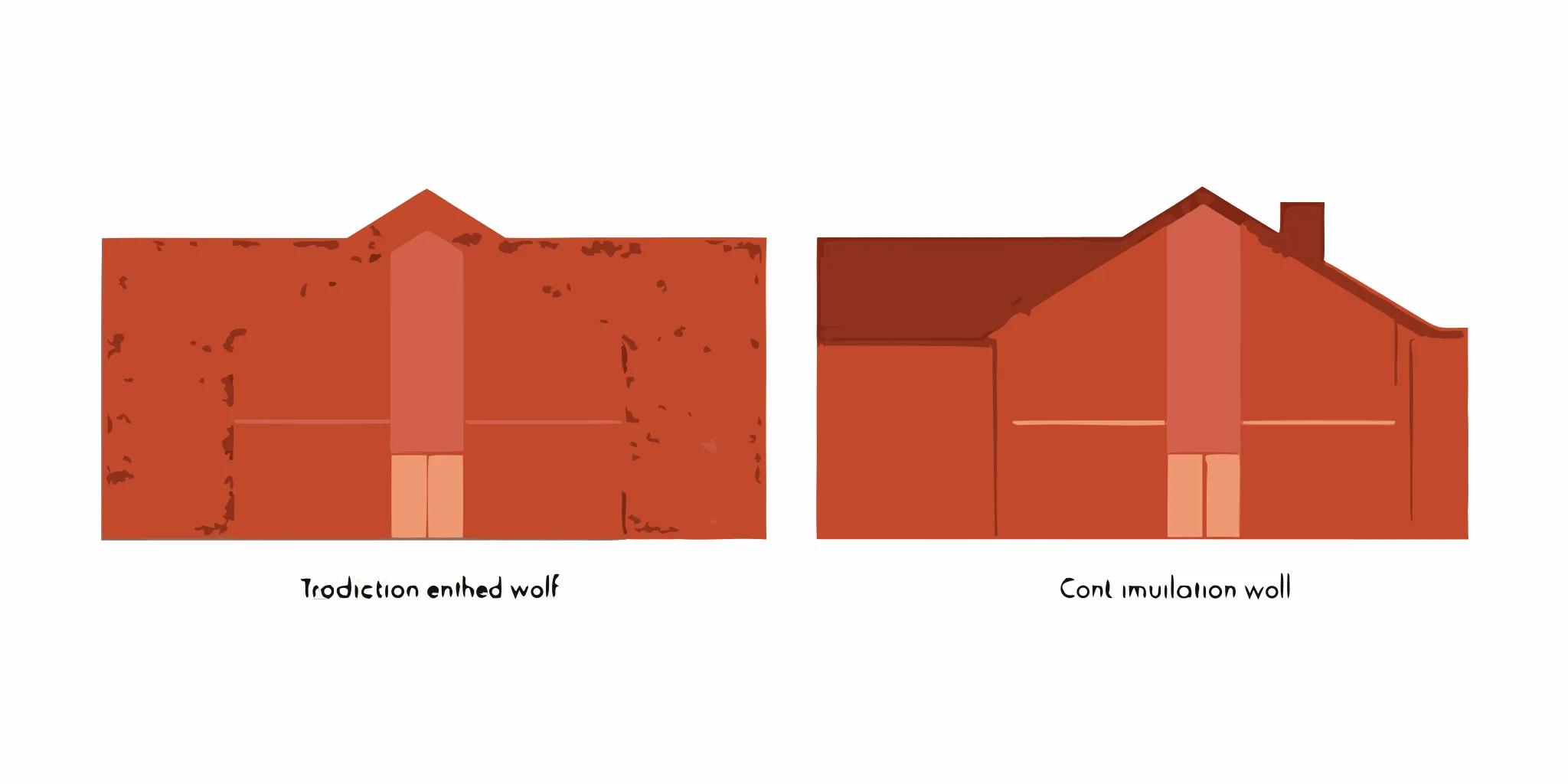
Traditional stucco relies on a three-coat application over metal lath, creating a rigid mineral shell. EIFS uses foam insulation boards mechanically or adhesively fastened to the substrate, topped with a mesh-reinforced base coat and synthetic finish. Understanding these structural differences is essential because they directly affect moisture management, thermal performance, and long-term maintenance requirements in New Jersey homes.
Despite looking similar from the street, these two cladding systems share almost nothing in their subsurface construction. One forms a dense mineral crust; the other wraps the home in continuous insulation with a synthetic weather barrier.
Traditional Stucco: The Three-Coat System
Traditional Portland cement stucco is applied in three distinct layers over a metal lath framework fastened to the sheathing. This assembly has been standard for over a century and is documented extensively by the National Research Council as a proven moisture-management strategy when detailed correctly.
- Scratch coat: The first layer of cement mortar is forced into the metal lath and scratched horizontally to create a mechanical bond key for the next coat.
- Brown coat: The second layer brings the wall to a uniform plane and builds the structural thickness. This coat typically cures for several days before the finish is applied.
- Finish coat: The final layer carries the color and texture. It is troweled, sprayed, or textured to achieve the desired aesthetic while sealing the assembly.
The total thickness reaches approximately 7/8 inch. Because the cement matrix is rigid, traditional stucco transfers structural movement directly to the surface, which is why control joints and proper flashing are critical details in New Jersey installations.
Traditional Portland cement stucco offers homeowners a proven, mineral-based exterior with exceptional longevity when properly maintained.
Modern EIFS: Synthetic Stucco With Continuous Insulation
Exterior Insulation and Finish Systems emerged in the 1970s as an energy-efficient alternative. According to the National Institute of Standards and Technology, properly detailed EIFS assemblies deliver weatherproof performance with insulation values that traditional stucco cannot match.
- Foam insulation boards (expanded or extruded polystyrene) are adhered or mechanically fastened to the substrate.
- A base coat reinforced with alkali-resistant glass fiber mesh is troweled over the insulation.
- A synthetic finish coat provides the final weather barrier and decorative surface.
- Modern assemblies include a drainage plane that directs incidental moisture downward and outward.
The entire system is significantly lighter than traditional stucco, reducing dead load on the structure. The foam layer also eliminates thermal bridging through studs, which is the primary pathway for heat loss in conventionally framed New Jersey homes.
Which System Delivers Better Energy Efficiency for NJ Homes?
EIFS dramatically outperforms traditional stucco in thermal efficiency. With insulation values of R-3.8 to R-5.6 per inch versus traditional stucco’s negligible R-0.20, EIFS provides continuous exterior insulation that eliminates thermal bridging through wall studs. The U.S. Department of Energy confirms this continuous insulation layer can reduce overall wall heat loss by 20 to 40 percent compared to cavity-only insulation.
Energy costs in New Jersey rank among the highest in the nation, making wall assembly efficiency a meaningful factor in monthly utility bills. The U.S. Department of Energy has published extensive research demonstrating that continuous exterior insulation significantly reduces thermal bridging, the phenomenon where heat escapes through wood or metal studs that bridge the interior conditioned space to the exterior.
How Continuous Insulation Changes the Equation
Traditional stucco relies entirely on cavity insulation between the studs. This means every stud location becomes a thermal bridge, reducing the effective R-value of the wall assembly by 15 to 25 percent depending on stud spacing and framing factor. EIFS wraps the entire exterior in a continuous layer of insulation, eliminating these thermal bridges entirely. The practical result for New Jersey homeowners is more consistent interior temperatures and reduced heating and cooling loads.
R-Value Comparison Table
| Property | Traditional Stucco | EIFS |
|---|---|---|
| R-value per inch | 0.20 | 3.8 to 5.6 |
| Continuous insulation | No | Yes |
| Thermal bridging protection | None | Full |
| Winter heat retention | Standard (cavity only) | Enhanced (full wrap) |
| Summer cooling benefit | Standard | Reduced heat gain |
How Do These Systems Handle New Jersey Moisture and Freeze-Thaw Cycles?
Both systems must manage moisture effectively in NJ’s climate. Traditional stucco depends on a drainage plane behind the lath and proper flashing to manage water that penetrates the cement surface. EIFS relies on a dedicated drainage plane integrated into the insulation layer. The National Research Council identifies detailing at openings and transitions as the most critical factor for longevity in both systems, with improper flashing accounting for the majority of premature failures.
New Jersey’s climate pattern alternating between heavy rain and freezing temperatures creates conditions that challenge any exterior cladding system. The National Research Council has extensively studied moisture management in cladding assemblies and found that proper detailing at penetrations and transitions is the single most important factor in system longevity.
Traditional Stucco Moisture Dynamics
Traditional stucco is porous. In New Jersey’s freeze-thaw cycles, water that enters the cement matrix expands upon freezing, generating internal stress that can produce hairline cracks over time. These cracks then allow additional moisture infiltration, creating a progressive cycle. Properly installed weep screeds at the base of the wall and flashings at windows and doors provide a path for water to exit the assembly.
Key maintenance items for stucco in New Jersey include:
- Annual inspection of caulking at window and door perimeters
- Prompt repair of any visible cracks before winter freeze cycles
- Clearance between stucco and grade to prevent splash-back
EIFS Moisture Management Evolution
Early barrier-type EIFS installations from the 1980s and 1990s lacked a dedicated drainage pathway, which led to moisture entrapment and wood decay in many homes. Modern EIFS assemblies incorporate a drainage plane that allows incidental moisture to exit at the base of the wall. The current generation of systems also uses flexible base coats and sealants that accommodate thermal movement without breaking the weather seal.
Durability and Maintenance: What NJ Homeowners Should Expect
Traditional stucco delivers exceptional impact resistance and fire protection, with documented service lives of 50 to 100 years when maintained. EIFS offers superior crack resistance due to its flexible construction and eliminates thermal bridging, but its foam core is more vulnerable to impact damage from hail, landscaping equipment, and active households. Maintenance priorities differ: stucco requires crack monitoring and sealant replacement, while EIFS demands attention to joint seals and surface coating integrity.
Impact Resistance and Surface Hardness
Traditional stucco is among the hardest residential cladding materials available. Its cementitious composition provides meaningful resistance to impact from hail, wind-borne debris, and routine contact. This makes it particularly well suited for homes in active suburban settings or areas prone to severe weather.
EIFS, by contrast, uses a foam core that compresses under impact. While the fiberglass mesh reinforcement provides significant tensile strength, the assembly can be punctured or dented more readily than stucco. Homes with low-hanging tree limbs, active children, or frequent landscaping activity may experience more maintenance events with EIFS.
Thermal Movement and Crack Resistance
New Jersey experiences seasonal temperature swings exceeding 100 degrees Fahrenheit. Traditional stucco, being rigid, develops stress cracks at control joints and at transitions between materials as the building frame expands and contracts. These cracks are cosmetic in most cases but require monitoring to prevent moisture infiltration.
EIFS systems use flexible base coats designed to accommodate thermal movement without cracking. This gives them a cosmetic advantage in maintaining a uniform appearance over time, particularly on larger wall expanses where thermal movement is more pronounced.
Expected Service Life
Both systems deliver exceptional longevity when properly detailed and maintained. Traditional stucco has a documented service life of 50 to 100 years, supported by hundreds of Garden State Brickface installations across New Jersey dating to the 1950s. EIFS service life typically ranges from 30 to 50 years before the surface coating may require renewal, though the insulation layer remains functional indefinitely.
Design Flexibility: Custom Finishes and the Brickface Advantage
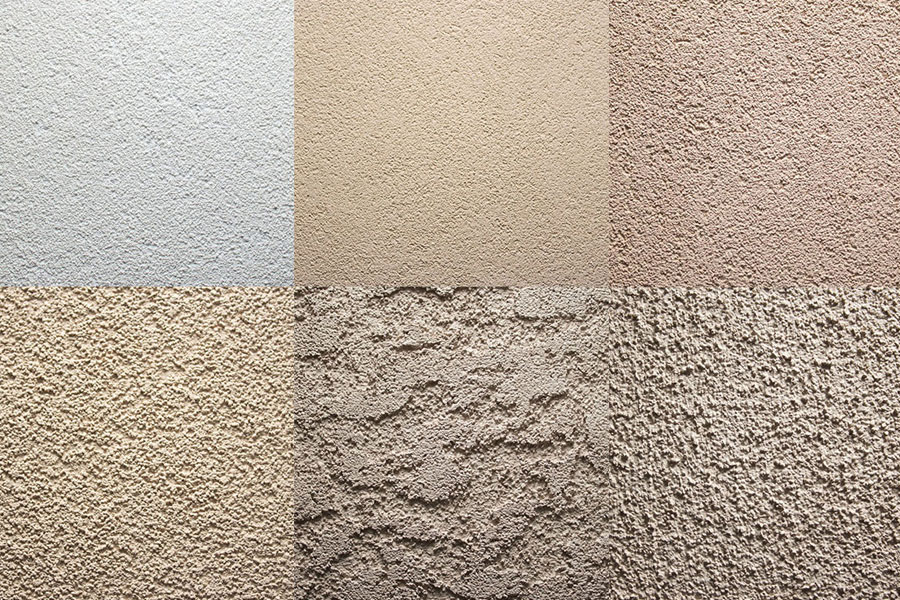
Both systems accept a wide range of textures and colors. Traditional stucco is tinted integrally or painted and can be applied in smooth, dash, or Spanish lace finishes. EIFS offers consistent factory-blended colors with excellent UV stability and can be shaped into architectural details like cornices and columns. Garden State Brickface’s proprietary brickface stucco process, developed in 1953, creates authentic brick and stone appearances using a stucco base a finish option neither standard system can replicate.
Both traditional stucco and EIFS offer extensive design flexibility, but they achieve their finishes through different methods. Traditional stucco uses integral color added to the finish coat, with subsequent painting available when the homeowner wants a color change. The finish can be troweled smooth, sprayed in a dash texture, or worked into a Spanish lace pattern.
EIFS finish coats are factory-blended and offer exceptional color consistency across large wall areas. The flexibility of EIFS also allows the creation of architectural detailing cornices, keystones, and column wraps that would require extensive formwork in traditional stucco. The color is integral to the finish coat and typically maintains its appearance for 15 to 20 years before recoating is needed.
Brickface Stucco: A Third Option
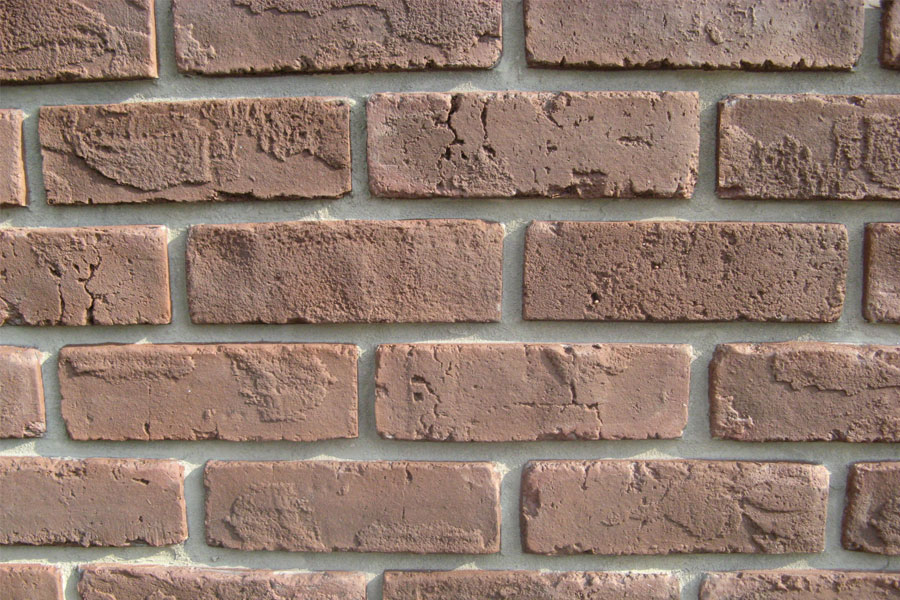
Garden State Brickface & Siding’s proprietary brickface stucco application, developed in 1953, creates the appearance of authentic brick or stone masonry using a stucco base. This technique involves a custom toning process that replicates the color variations found in natural materials, giving homeowners the aesthetic of premium masonry at a fraction of the cost. It is a true differentiator that neither standard stucco nor EIFS can duplicate.
How to Choose: Decision Framework for New Jersey Homeowners
Choose traditional stucco when impact resistance, fire safety, and a proven 50-to-100-year service life are your top priorities. Choose EIFS when energy efficiency, continuous insulation, and uniform appearance matter most. Garden State Brickface offers professional consultation to evaluate your home’s specific conditions and recommend the appropriate system, drawing on over 70 years of New Jersey installation experience.
Choose Traditional Stucco If:
- Impact resistance is a priority active households, hail-prone areas
- You want a 50-to-100-year service life with routine maintenance
- Fire resistance is a concern cementitious materials are non-combustible
- You plan to change paint colors periodically over the home’s life
- Your budget prioritizes lower upfront installation costs
Choose EIFS If:
- Energy efficiency and lower utility bills are primary drivers
- You want continuous insulation that eliminates thermal bridging
- A smooth, uniform finish with consistent color is important
- You are retrofitting an older home and want to improve the wall envelope
- Architectural detailing like cornices and column wraps is part of the design
For more reading on stucco maintenance, see our guide on stucco moisture damage in New Jersey. If you are dealing with older synthetic stucco, our EIFS page covers modern drainage EIFS solutions. And for a broader look at exterior cladding, explore NJ siding replacement options.
Frequently Asked Questions
How can I tell if my home has EIFS or traditional stucco?
Tap the wall surface. Traditional stucco produces a solid, dense sound and the surface will not flex under thumb pressure. EIFS sounds hollow when tapped because the foam insulation layer sits beneath the finish coat. You can also check by examining the wall thickness at window returns EIFS is noticeably thicker due to the insulation board. A professional inspection can provide a definitive assessment.
Is EIFS more energy efficient than traditional stucco?
Yes, significantly. EIFS provides continuous exterior insulation with an R-value of 3.8 to 5.6 per inch, compared to traditional stucco’s R-0.20. The Department of Energy confirms that continuous insulation reduces thermal bridging through wall studs, which can lower overall wall heat loss by 20 to 40 percent.
Does traditional stucco last longer than EIFS in New Jersey?
Traditional stucco has a longer documented service life: 50 to 100 years with proper maintenance versus 30 to 50 years for EIFS before surface recoating may be needed. However, EIFS installations that require replacement typically involve only the finish coating, not the insulation layer. The key variable for both systems in New Jersey is the quality of initial installation and ongoing maintenance, particularly moisture management at openings and transitions.
Do insurance companies charge more for homes with EIFS siding?
Some carriers apply surcharges or exclusions for EIFS-clad homes, particularly those built before modern drainage EIFS became standard. This stems from moisture-related claims on early barrier-type EIFS installations from the 1980s and 1990s. Homes with properly detailed modern drainage EIFS generally face fewer restrictions. If you are purchasing a home with EIFS, it is worth confirming with your insurer whether the system meets their underwriting criteria and whether a professional inspection report can address their concerns.
Can EIFS be repaired if it gets damaged?
Yes. Localized damage to EIFS such as a puncture or dent can be cut out and patched by a qualified contractor. The repair involves removing the damaged section, fitting new foam insulation board, applying base coat and mesh, and finishing with a color-matched synthetic coating. Matching the texture and color of the existing finish requires skill, which is why professional repair is recommended over DIY attempts.
Ready to Choose the Right Exterior Cladding for Your NJ Home?
Selecting between traditional stucco and EIFS is a significant decision that affects your home’s energy performance, maintenance requirements, and curb appeal for decades. Garden State Brickface & Siding has served New Jersey homeowners since 1953 with in-house crews, not subcontractors, and a reputation backed by over 200 five-star reviews. Our estimators will inspect your property, discuss your priorities, and provide a professional recommendation based on your home’s specific conditions and your budget.
Ready to get started? Call 908-241-5900 to schedule your free consultation. Our team serves Union, Middlesex, Somerset, Mercer, Bergen, Essex, Morris, Passaic, Hudson, Monmouth, Ocean, and all surrounding New Jersey counties.