How to Choose a Roofing Contractor NJ Homeowners Trust

A roof project is a major investment, but the lowest estimate is not always the safest choice. Homeowners across New Jersey need to compare more than shingles and prices: the contractor’s credentials. Insurance, written scope, communication, and experience all affect the finished roof and the protection beneath it.
To choose a reliable roofing contractor NJ homeowners can trust, start by verifying New Jersey registration. Then confirm workers’ compensation and general liability insurance, review references and past work, compare detailed bids, and look for proven local experience.
A careful selection process also gives you a clear way to evaluate contractors before anyone climbs onto your roof. Garden State Brickface & Siding has served New Jersey homeowners for 73 years, with in-house crews and consultation-based estimates. Before comparing proposals, begin with the credential every residential contractor should be able to document.
SCHEDULE A FREE ESTIMATEWhy Verifying NJ Licensing Is Your First Step
Before you compare estimates, confirm that the contractor is legally registered to perform residential home improvement work in New Jersey. State law requires home improvement contractors, including roofing contractors, to register with the New Jersey Division of Consumer Affairs. Registration does not guarantee that every project will go perfectly. But it gives you a basic credential to verify before you invite a company to inspect your roof or discuss a contract.
Use the official New Jersey registration search
Start with the New Jersey Division of Consumer Affairs home improvement contractor page. Use the contractor-registration verification option provided there, then search using the business name or registration information supplied by the contractor. If the company gives you a registration number, enter it carefully and confirm that the result matches the business you are considering.
Pay attention to the legal business name and the contractor’s identifying details. A familiar brand name may not be the same as the registered business entity. If the search produces no result, the name does not match, or the contractor avoids giving you registration information, pause the process. Contact the Division of Consumer Affairs through its official website if you need help interpreting a result.
Verify before requesting multiple quotes
Ask every contractor for their New Jersey registration information before scheduling estimates. Then complete the same check for each company, rather than assuming that a polished website, online reviews, or a storm-related recommendation is proof of compliance. New Jersey guidance specifically directs homeowners to verify a contractor’s registration before engaging them for home improvement work.
This quick step can narrow your list before you spend time comparing materials, timelines, warranties, and prices. Once registration is confirmed, move on to insurance, references, and a detailed written proposal. A legitimate roofing contractor should be comfortable answering basic credential questions and giving you time to make an informed decision.
Insurance, References, and Reputation: What to Verify
A professional roofing contractor should make it easy to verify the basics before you sign an agreement. Look at insurance, past work, and public reputation together. Each provides a different kind of protection, and a strong estimate is not a substitute for doing this due diligence.
Confirm both types of insurance
Roofing work involves ladders, tools, heavy materials, and a crew working around your home. Confirm that the contractor carries both workers’ compensation insurance and general liability insurance. Workers’ compensation helps address injuries to employees, while general liability coverage addresses accidental property damage or other claims connected with the job. These are separate protections, so do not assume one policy covers both situations.
Ask the contractor to provide current copies of the policies for your project file. Review the named business, policy dates, and coverage details. If you are unsure whether a document is current or sufficient, contact the insurer using independently verified contact information. A reputable contractor should be comfortable answering reasonable questions about coverage rather than asking you to take an undocumented assurance on faith. The National Association of Certified Home Inspectors recommends workers’ compensation, general liability insurance, and keeping policy copies for your records.
Request references you can actually evaluate
Ask for at least three references from comparable roofing projects, then review the contractor’s past work. A useful reference can describe whether the crew showed up as promised, cleaned up after the job, managed unexpected issues, and kept communication open throughout the process.
Pay attention to projects similar to yours in scope, roof type, and property value. A portfolio of small repair work does not necessarily speak to a contractor’s ability to complete a full roof replacement on a two-story colonial. Call the references and ask specific questions about their experience, including whether the job finished on schedule and on budget, and whether the contractor addressed any issues that came up during construction.
Use reputation as evidence, not the only test
Online reviews can help you gauge a contractor’s reliability, responsiveness, and quality of work. Look for consistent patterns across multiple platforms, including Google, the Better Business Bureau, and any industry-specific review sites. A single bad review does not tell you as much as a pattern of complaints about the same issue, such as slow communication, unpaid subcontractors, or unresolved problems after the job is complete.
Treat reputation as supporting evidence alongside registration, insurance, and references. A contractor that has dozens of positive reviews but cannot produce proof of New Jersey registration is not a safe choice, and a contractor with solid credentials but no recent verifiable reviews may still be worth evaluating.
How To Compare Roofing Bids Without Getting Confused
Comparing written estimates is easier when every bid covers the same elements. The goal is not to find the lowest number but to understand what each price represents and whether the contractor has accounted for the steps a professional roofing job requires.
What a thorough estimate includes
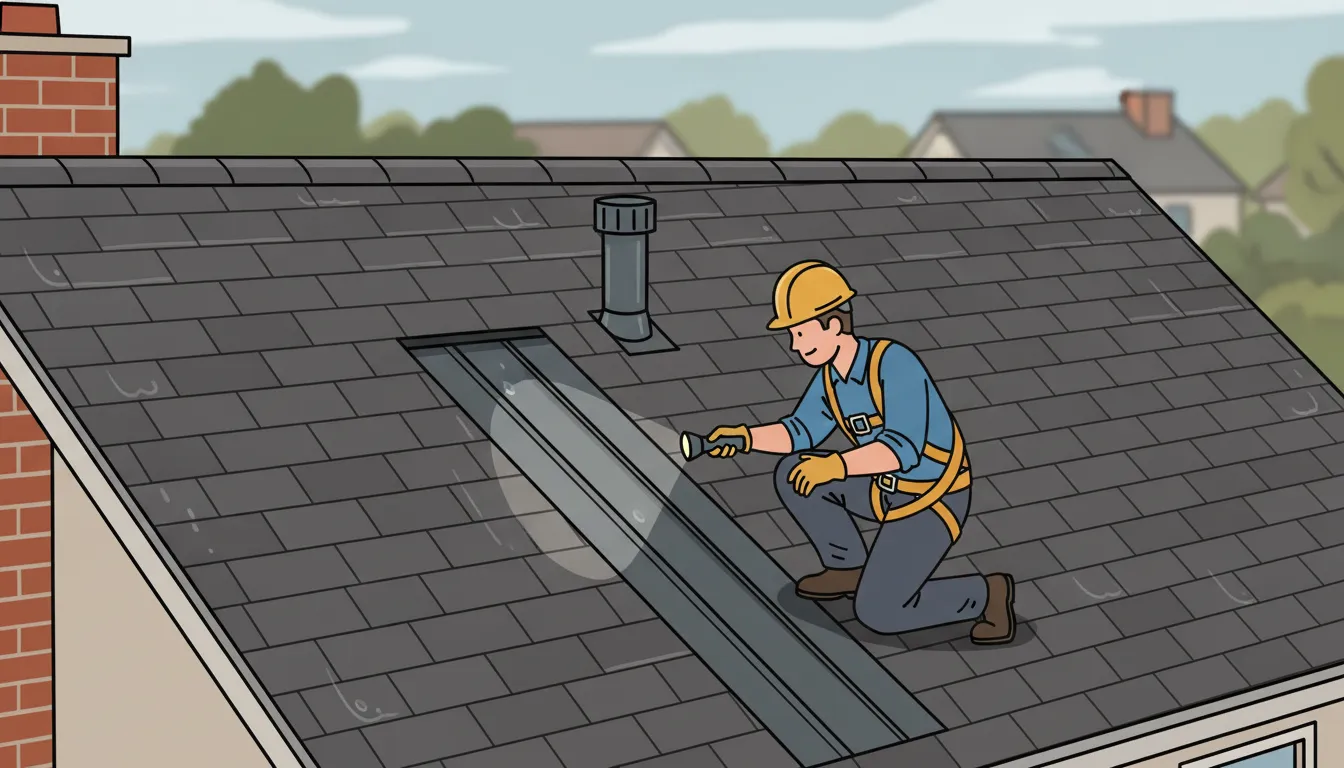
A detailed written estimate should identify the materials, including shingle brand, color, weight, and grade. It should specify underlayment type, flashing materials, ventilation components, and any pipe boots or skylight flashing. It should list the work scope for labor, including tear-off of the existing roof, deck inspection and repair, installation, and cleanup.
A professional estimate also includes separate line items for permits, dumpster fees, disposal charges, and any anticipated structural repairs. Payment terms should be clearly defined, including the deposit amount, progress payments, and milestones tied to completed work rather than elapsed time. The estimate should also identify warranty terms for both materials and workmanship and specify the timeline from start to completion.
SCHEDULE A FREE ESTIMATERed Flags That Warrant Caution With Any Roofer
Certain patterns should slow down or stop your evaluation of a contractor, regardless of how competitive their bid appears. These warning signs are not deal-breakers on their own, but they deserve a thorough explanation before you proceed.
Payments that get ahead of the work
Ask about the payment schedule early. A deposit that exceeds a reasonable percentage of the total before materials arrive or work begins should raise a question. The New Jersey Division of Consumer Affairs provides guidelines on contractor payment practices, and a contractor who cannot explain their payment terms in writing may be worth bypassing.
A legitimate contractor can explain how payments connect to completed phases of the project. If the proposed schedule requires most of the payment before the roof is fully installed, ask for a revised schedule that ties payments to documented progress.
Permit responsibility is pushed onto you
The contractor should handle the permit application as part of the project. A contractor who tells you that permits are not needed, or that you should apply for them yourself, is creating a liability for you. Missed permits can affect your insurance coverage, your ability to sell the home, and your legal standing if a dispute arises after the work is done.
Ask specifically which permits the project requires and whether the contractor’s estimate includes the cost of obtaining them. A contractor who cannot answer these questions clearly may not be working within the code requirements of your municipality.
Pressure tactics after a storm
Storm chasing is a known problem in the roofing industry. Contractors who appear in a neighborhood after a storm, offer a quick inspection, and demand an immediate decision should be treated with caution. A legitimate contractor will give you time to review the written proposal, verify their credentials, and compare their offer with at least one other estimate.
New Jersey requires a three-day right of rescission on home improvement contracts, giving you time to cancel without penalty after signing. If a contractor pressures you to waive that right or sign before the inspection is complete, that is a clear warning sign.
No proof of insurance, references, or lien protection
A contractor who cannot or will not provide current proof of insurance, references from recent New Jersey projects, or information about how subcontractor liens are handled is not ready for your business. Lien protection is particularly important: if the contractor fails to pay a subcontractor or material supplier, that unpaid party can file a lien against your property, even if you have already paid the contractor in full. Ask how the contractor ensures that all parties further down the chain are paid and whether lien waivers are provided at the end of the project.
New Jersey’s Truth in Consumer Contract, Warranty, and Notice Act reinforces your right to clear, written contract terms. If a contractor cannot explain these protections in plain language, that is another reason to keep looking.
Why Local Experience Matters for Your Roofing Project
A roofing contractor who knows New Jersey’s climate, building codes, and supplier network brings practical advantages that a national chain or an out-of-state crew cannot match. Local experience affects material selection, installation details, and the day-to-day management of the project.
Local knowledge goes beyond knowing the weather
New Jersey experiences temperature swings, coastal storms, snow and ice, and humidity that vary significantly between North Jersey and the Shore region. A contractor who has worked across multiple New Jersey counties understands how these conditions affect material performance and installation timing.
Ask prospective contractors which New Jersey municipalities they work in most frequently and how they adjust their installation approach based on the home’s location and exposure. A contractor who can describe how they handle ridge ventilation in a Cape May climate versus a Sussex County climate is demonstrating the kind of local expertise that protects your investment, regardless of which company you choose.
Codes, suppliers, and accountability
Building codes vary by municipality in New Jersey, and a local contractor is more likely to know the specific requirements of your town’s building department. Local contractors also maintain relationships with regional suppliers, which can mean faster material availability and better knowledge of which products perform well under local conditions.
A company with a verifiable local address, a history of projects in your area, and a reputation to protect in your community has more at stake than a contractor operating from a temporary office or a P.O. box. Local accountability means the company is more likely to address issues that arise after installation, because its long-term business depends on its reputation in the same market where you live.
Questions To Ask Before You Sign a Roofing Contract
Before signing, meet with your top candidates and ask these questions directly. The way a contractor answers them can tell you as much as the content of the answers themselves.
- Who will be on my roof?
Ask whether the company uses its own crews or subcontractors, and whether the same crew works on every job. Some contractors use different crews for different projects, which can affect consistency and accountability. The crew that shows up matters. Ask about training, supervision, and whether the company runs background checks. A contractor that can name its lead installer and describe its crew structure is demonstrating transparency. If subcontractors are used, ask how they are selected and who supervises them, and confirm that the general contractor carries insurance that covers subcontractor activities. - Can you provide local New Jersey references from the past year?
Recent, nearby projects can show how the contractor works with homes and weather conditions similar to yours. Ask references whether the crew arrived as promised, protected the property, communicated changes, and completed cleanup. Photos are useful, but a direct conversation can reveal details that a portfolio does not. - What warranty do you offer on materials and labor?
Request the warranty terms in writing. Ask what is covered, how long coverage lasts, who handles a claim, and whether installation requirements or maintenance affect it. A materials warranty and a labor warranty are not necessarily the same, so make sure both are addressed. - How do you handle unexpected issues during the project?
Ask how the contractor documents concealed damage, changes the scope, and obtains your approval before doing additional work. The contract should spell out the materials, timeline, payment schedule, and process for changes. Do not rely on verbal promises. - How do you protect my landscaping and property?
Ask about tarps, walkways, gutters, outdoor fixtures, plantings, debris removal, and the final property inspection. Roofing is demanding work, and a professional crew should explain its safety and cleanup procedures before work begins.
Finally, ask whether the company belongs to a professional roofing association. Such organizations often set guidelines for member quality and business ethics, although membership should complement, not replace, your review of insurance, references, registration, and the written contract.
Ready to schedule your roofing estimate?
Choosing a roofing contractor is an important decision, and a project-specific conversation can help you understand the recommended scope, materials, and next steps for your home. Garden State Brickface & Siding has served New Jersey homeowners since 1953 with in-house crews and consult-based estimates.
SCHEDULE A FREE ESTIMATE